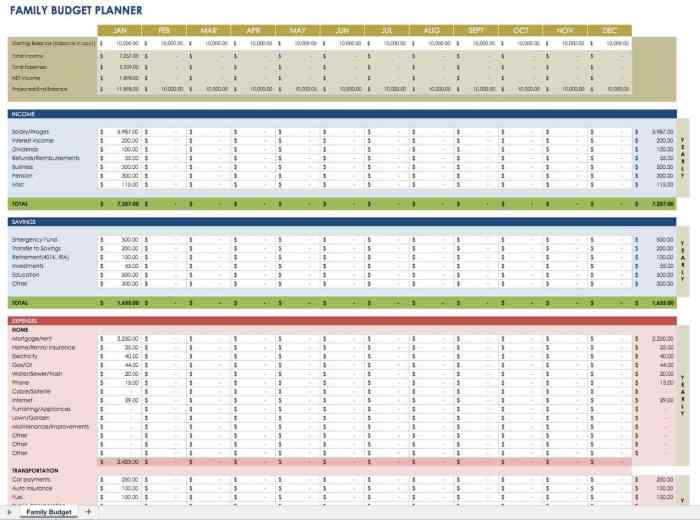
Securing your family’s financial future requires a proactive and well-defined strategy. This guide delves into the essential aspects of financial planning for families, offering practical advice and actionable steps to navigate the complexities of budgeting, saving, investing, and managing debt. From setting realistic financial goals aligned with your family’s values to developing a comprehensive estate plan, we’ll explore the key elements needed to build a strong and secure financial foundation for generations to come.
We’ll cover a range of topics, including creating a family budget, managing debt effectively, exploring various savings and investment options, securing appropriate insurance coverage, and establishing a robust estate plan. Understanding these elements will empower you to make informed financial decisions that benefit your family both now and in the future. This guide aims to provide a clear and accessible framework for families at all stages of their financial journey.
Debt Management Strategies for Families
Effective debt management is crucial for a family’s long-term financial health. Uncontrolled debt can severely impact savings, investment opportunities, and overall financial well-being. Understanding various debt management strategies and their implications is essential for building a secure financial future.
High levels of debt, particularly high-interest debt, can significantly hinder a family’s progress toward their financial goals. The interest payments alone can consume a substantial portion of the family’s income, leaving less for essential expenses, savings, and investments. This can create a vicious cycle, making it increasingly difficult to reduce the debt burden. This section explores various strategies for tackling debt and creating a sustainable repayment plan.
Debt Management Strategies
Several strategies can help families effectively manage and reduce their debt. The most common include debt consolidation, the debt snowball method, and the debt avalanche method. Each approach has its advantages and disadvantages, and the best choice depends on individual circumstances and financial goals.
- Debt Consolidation: This involves combining multiple debts into a single loan, often with a lower interest rate. This simplifies repayment, potentially reducing the total interest paid over time. For example, a family with several credit card debts with high interest rates might consolidate them into a personal loan with a lower interest rate, making payments more manageable.
- Debt Snowball Method: This method prioritizes paying off the smallest debt first, regardless of its interest rate. The psychological boost of quickly eliminating a debt can motivate continued repayment efforts. Once the smallest debt is paid, the money previously allocated to it is then applied to the next smallest debt, creating a snowball effect. This method is appealing for its motivational aspects, but it may not be the most financially efficient approach.
- Debt Avalanche Method: This method prioritizes paying off the debt with the highest interest rate first, regardless of the debt’s size. This approach minimizes the total interest paid over time, resulting in faster debt reduction and potential long-term savings. For example, a family might prioritize paying off a credit card with a 20% interest rate before tackling a smaller loan with a 5% interest rate.
Implications of High-Interest Debt
High-interest debt poses significant challenges to long-term financial planning. The substantial interest payments divert funds away from essential financial goals, such as saving for retirement, children’s education, or a down payment on a home. This can lead to a cycle of debt, delaying financial progress and potentially causing significant financial stress. For instance, consistently high credit card interest payments can delay the accumulation of retirement savings, potentially impacting the family’s financial security in their later years.
Creating a Debt Repayment Plan
Developing a comprehensive debt repayment plan requires careful consideration of a family’s income, expenses, and debt obligations. The plan should be realistic and achievable, ensuring that essential expenses are met while making consistent progress toward debt reduction. A well-structured plan incorporates detailed budgeting, prioritization of debt payments, and regular monitoring of progress.
- Assess Income and Expenses: Begin by meticulously tracking all income sources and expenses. This provides a clear picture of the family’s financial situation and available funds for debt repayment.
- List All Debts: Create a comprehensive list of all debts, including the balance, interest rate, minimum payment, and due date for each. This organized list is crucial for choosing a suitable debt repayment strategy.
- Choose a Debt Management Strategy: Select the debt management strategy (debt consolidation, snowball, or avalanche) that best aligns with the family’s financial situation and personality. Consider both the financial efficiency and motivational aspects of each approach.
- Allocate Funds for Repayment: Allocate a specific amount of money each month to debt repayment, ensuring it’s a manageable amount that doesn’t compromise essential living expenses. Adjust the allocation as needed based on income and progress.
- Monitor Progress and Adjust as Needed: Regularly review the debt repayment plan, tracking progress and making adjustments as necessary. Life circumstances can change, so flexibility is key to maintaining a sustainable plan.
Savings and Investment Planning for Families
Building a secure financial future for your family requires a well-defined savings and investment strategy. This involves carefully considering your family’s short-term and long-term goals, risk tolerance, and available resources. A diversified approach, balancing risk and reward, is crucial for achieving financial stability and prosperity. This section will explore various savings vehicles and investment options to help families navigate this important process.
Savings Vehicles for Families
Choosing the right savings vehicle depends on your family’s immediate needs and financial goals. Several options offer varying levels of liquidity and interest rates. Understanding the differences is key to making informed decisions.
- High-Yield Savings Accounts: These accounts offer higher interest rates than traditional savings accounts, making them ideal for emergency funds or short-term savings goals. The money is easily accessible, providing flexibility for unexpected expenses. Interest rates fluctuate based on market conditions.
- Money Market Accounts (MMAs): MMAs offer slightly higher interest rates than savings accounts and often come with check-writing capabilities and debit card access. They provide a balance between liquidity and earning potential, suitable for short-term savings goals and managing cash flow.
- Certificates of Deposit (CDs): CDs offer a fixed interest rate for a specific term (e.g., 6 months, 1 year, 5 years). They generally offer higher interest rates than savings accounts or MMAs but come with penalties for early withdrawal. CDs are suitable for saving for longer-term goals where you don’t need immediate access to the funds, like a down payment on a house or college tuition.
Investment Options for Families
Investing allows your family’s money to grow over time, potentially outpacing inflation. However, it’s crucial to align investment choices with your risk tolerance and financial objectives. A diversified portfolio is generally recommended to mitigate risk.
The following investment options cater to different risk appetites and financial goals:
- Stocks (Equities): Represent ownership in a company. Stocks offer high growth potential but also carry higher risk. They are generally suitable for long-term investors with a higher risk tolerance.
- Bonds: Represent loans made to corporations or governments. Bonds generally offer lower returns than stocks but are considered less risky. They are a good option for more conservative investors seeking stability.
- Mutual Funds: Pool money from multiple investors to invest in a diversified portfolio of stocks, bonds, or other assets. Mutual funds offer diversification and professional management but may come with fees.
- Exchange-Traded Funds (ETFs): Similar to mutual funds, but they trade on stock exchanges like individual stocks. ETFs offer diversification and lower expense ratios than many mutual funds.
- Real Estate: Investing in properties can offer both income (rental income) and appreciation in value. However, real estate investments require significant capital and can be illiquid.
Hypothetical Investment Portfolio
Let’s consider a family with a moderate risk tolerance and a long-term goal of saving for their children’s college education and retirement. Their timeline is 15-20 years.
A possible portfolio allocation could be:
| Asset Class | Allocation Percentage | Rationale |
|---|---|---|
| Stocks (Index Funds) | 50% | Provides long-term growth potential, diversified across various sectors. |
| Bonds (Government & Corporate) | 30% | Offers stability and income generation to balance the risk of stocks. |
| Real Estate Investment Trust (REIT) | 10% | Provides exposure to the real estate market without direct property ownership. |
| Cash (High-Yield Savings Account) | 10% | Provides liquidity for unexpected expenses and short-term opportunities. |
This is a sample portfolio and should be adjusted based on the family’s specific circumstances, risk tolerance, and financial goals. Professional financial advice is always recommended.
Insurance Planning for Families
Securing your family’s financial future requires a comprehensive insurance strategy. Unexpected events, such as illness, accidents, or death, can significantly impact a family’s financial stability. Proper insurance planning acts as a crucial safety net, mitigating potential financial hardship and ensuring continued well-being. This section Artikels essential insurance coverages and strategies for families.
Essential Insurance Coverage for Families
A robust insurance plan typically includes several key components. The specific needs will vary depending on individual circumstances, but a solid foundation generally consists of health, life, disability, and home insurance. These policies work together to protect against a wide range of potential financial setbacks.
Health Insurance
Health insurance is paramount, covering medical expenses arising from illness or injury. The cost of healthcare can be substantial, and without insurance, even minor medical issues can lead to significant debt. Families should carefully consider different health insurance plans, comparing coverage, deductibles, and premiums to find the most suitable option based on their budget and healthcare needs. Choosing a plan with comprehensive coverage is usually advisable, even if it means a higher premium.
Consider factors like the number of family members, pre-existing conditions, and the frequency of doctor visits when making your selection.
Life Insurance
Life insurance provides a financial safety net for your family in the event of your death. The payout, or death benefit, can help cover funeral expenses, outstanding debts, ongoing living expenses, and your children’s education. The amount of coverage needed depends on your family’s financial obligations, income, and desired lifestyle. Common types of life insurance include term life insurance (offering coverage for a specific period) and whole life insurance (providing lifelong coverage with a cash value component).
Determining the appropriate coverage amount often involves calculating your family’s future needs and ensuring adequate financial support during your absence. For example, a family with young children and a mortgage might require a significantly higher death benefit than a family without dependents and substantial savings.
Disability Insurance
Disability insurance protects your income in case of an accident or illness that prevents you from working. This coverage can replace a portion of your lost income, ensuring your family can continue to meet their financial obligations. Disability insurance is particularly crucial for families who rely on a single income. Consider both short-term and long-term disability insurance, understanding the coverage duration and potential payout amounts.
For example, a long-term disability policy would offer income replacement if you were unable to work for an extended period due to a chronic illness or severe injury.
Home Insurance
Home insurance protects your home and its contents from damage or loss due to fire, theft, or natural disasters. This coverage is vital to safeguard your most significant asset and avoid potentially catastrophic financial losses. The amount of coverage should reflect the current market value of your home and the replacement cost of your belongings. It’s recommended to review your home insurance policy periodically to ensure adequate coverage based on changes in your property value or possessions.
Consider additional coverage options like flood insurance or earthquake insurance depending on your location and risk factors. For example, if you live in an area prone to flooding, obtaining flood insurance is essential to protect your home from potential damage.
Estate Planning for Families
Estate planning is a crucial aspect of financial planning for families, ensuring the smooth transfer of assets and providing for the well-being of loved ones after death or incapacitation. A well-structured estate plan minimizes potential conflicts, reduces tax burdens, and protects family members’ interests. It’s a proactive approach that provides peace of mind, knowing that your wishes will be carried out effectively.
Key Components of Estate Planning
A comprehensive estate plan typically includes several key legal documents. These documents work together to define how your assets will be distributed and who will manage your affairs if you become incapacitated. Understanding each component is vital to creating a plan that effectively addresses your family’s unique needs.
Wills
A will is a legal document that Artikels how you wish to distribute your assets after your death. It specifies who will inherit your property, including real estate, bank accounts, investments, and personal belongings. Without a will, the distribution of your assets will be determined by your state’s intestacy laws, which may not align with your wishes. Different types of wills exist, such as simple wills, complex wills, and holographic wills (handwritten wills), each suited to varying circumstances and asset complexities.
For example, a simple will might be suitable for a couple with modest assets and straightforward inheritance plans, while a complex will is more appropriate for high-net-worth individuals with intricate asset structures and specific beneficiary requirements.
Trusts
Trusts are legal entities that hold assets for the benefit of designated beneficiaries. They provide a more sophisticated approach to asset management and distribution compared to wills. Various types of trusts cater to specific needs, such as revocable living trusts (allowing for changes during your lifetime), irrevocable trusts (providing asset protection and tax benefits), and testamentary trusts (taking effect after your death).
For instance, a revocable living trust allows you to maintain control over your assets while providing for their smooth transfer to beneficiaries after your death, minimizing probate delays and costs. An irrevocable trust, on the other hand, offers asset protection from creditors and potential tax advantages, but relinquishes control to the trustee.
Power of Attorney Documents
Power of attorney documents authorize another person (your agent or attorney-in-fact) to make decisions on your behalf in specific areas, such as financial matters or healthcare. A durable power of attorney remains in effect even if you become incapacitated, while a springing power of attorney becomes effective only upon the occurrence of a specific event, such as incapacitation. These documents are essential for ensuring your affairs are managed effectively should you become unable to manage them yourself.
For example, a durable power of attorney for finances allows a designated person to manage your bank accounts, pay bills, and make investment decisions if you are unable to.
Ensuring a Smooth Transfer of Assets
Effective estate planning significantly streamlines the transfer of assets to heirs. It minimizes probate delays and costs, avoids potential disputes among family members, and ensures that your wishes are respected. A well-defined plan minimizes uncertainty and reduces the emotional and financial burden on your loved ones during a difficult time. For example, a clearly defined will with specific instructions on asset distribution avoids potential family disagreements over inheritance, leading to a more peaceful and organized transition.
Similarly, the use of trusts can expedite the transfer of assets, bypassing lengthy probate processes and ensuring timely distribution to beneficiaries.
Steps Involved in Creating a Comprehensive Estate Plan
Creating a comprehensive estate plan involves several steps. First, it’s crucial to inventory all your assets, including real estate, investments, bank accounts, and personal property. Next, identify your beneficiaries – those you wish to inherit your assets. Third, you need to choose the appropriate legal documents, considering your specific circumstances and goals. Fourth, you should consult with an estate planning attorney to draft and execute these documents.
Finally, you should regularly review and update your estate plan to reflect changes in your circumstances, such as marriage, divorce, the birth of a child, or significant changes in your assets. Failing to update your estate plan can render it ineffective and lead to unintended consequences. For example, a will drafted before marriage may not reflect your spouse’s inheritance rights, leading to complications for your family after your death.
Financial Advice, Auditing, Goals, and Planning
Financial well-being for families hinges on a coordinated approach encompassing advice, auditing, goal setting, and comprehensive planning. These four elements are not independent but rather interconnected components of a holistic financial strategy, each informing and supporting the others. Understanding their interplay is crucial for achieving long-term financial security and prosperity.Financial advice, auditing, goal setting, and planning form a cyclical process that continuously refines a family’s financial trajectory.
Financial advice provides the guidance, auditing offers the assessment, goals define the targets, and planning lays out the roadmap to reach them. This iterative process allows for adjustments based on changing circumstances and ensures the family stays on track towards their financial aspirations.
Financial Advice: Expert Guidance
Financial advice involves seeking professional guidance from qualified advisors like financial planners or wealth managers. These professionals provide personalized recommendations based on a family’s unique circumstances, risk tolerance, and financial goals. For instance, a family aiming for early retirement might receive advice on aggressive investment strategies, while a family prioritizing debt reduction might be advised to focus on budgeting and debt consolidation.
The advice may cover various aspects, including investment strategies, tax planning, retirement planning, and insurance coverage. A crucial aspect of good financial advice is the advisor’s understanding of the family’s values and long-term objectives.
Financial Auditing: A Comprehensive Review
Financial auditing involves a thorough examination of a family’s financial situation. This involves reviewing income, expenses, assets, and liabilities to gain a clear understanding of their current financial health. This process can be done independently or with the help of a financial professional. For example, a family might audit their spending habits to identify areas where they can cut back and save more.
This might reveal that dining out excessively or unnecessary subscriptions are eating into their savings. A comprehensive audit provides a realistic picture of the family’s financial position, highlighting strengths and weaknesses, and informing subsequent planning decisions.
Financial Goals: Defining the Target
Clearly defined financial goals are essential for effective financial planning. These goals should be Specific, Measurable, Achievable, Relevant, and Time-bound (SMART). For example, a family might set a goal to save $50,000 for a down payment on a house within three years. Another goal might be to pay off all credit card debt within one year. Setting clear goals provides direction and motivation, enabling the family to track progress and make necessary adjustments along the way.
The goals should align with the family’s values and long-term vision.
Financial Planning: The Roadmap to Success
Financial planning involves developing a comprehensive strategy to achieve the family’s financial goals. This includes creating a budget, managing debt, investing wisely, and planning for retirement and other long-term needs. A family might use a financial planning tool or work with a financial advisor to develop a detailed plan that Artikels specific steps to take, timelines, and potential risks.
For example, a family planning for retirement might create a plan that includes contributions to retirement accounts, adjustments to their investment portfolio based on their risk tolerance and time horizon, and strategies to minimize taxes on retirement income. Regular review and adjustments are key to keeping the plan aligned with the family’s evolving needs and circumstances.
Effective financial planning is not a one-time event, but rather an ongoing process of assessment, adjustment, and growth. By consistently reviewing your financial goals, adapting your strategies as needed, and seeking professional guidance when necessary, you can ensure your family’s financial well-being. Remember that building a secure financial future is a collaborative effort, requiring open communication, shared responsibility, and a commitment to long-term planning.
With careful planning and consistent effort, you can create a legacy of financial stability and opportunity for your loved ones.
Questions Often Asked
What is the difference between a 50/30/20 budget and a zero-based budget?
The 50/30/20 rule allocates 50% of income to needs, 30% to wants, and 20% to savings and debt repayment. Zero-based budgeting starts from zero each month, requiring you to allocate every dollar to a specific category.
How often should I review my family’s financial plan?
Ideally, you should review your financial plan at least annually, or more frequently if there are significant life changes (e.g., job loss, birth of a child, major purchase).
Where can I find a qualified financial advisor?
You can find qualified financial advisors through referrals, online directories, or professional organizations like the Financial Planning Association.
What are some common mistakes families make in financial planning?
Common mistakes include failing to create a budget, neglecting to save for retirement, accumulating high-interest debt, and lacking adequate insurance coverage.