Achieving financial goals requires careful planning and consistent effort. The right tools can significantly simplify this process, transforming complex financial management into a manageable and even enjoyable experience. From budgeting apps to investment trackers, a range of options exist to cater to diverse needs and preferences. This exploration delves into the best tools available, helping you choose the perfect fit for your unique financial journey.
This guide examines various tools categorized by their specific functions: budgeting and expense tracking, savings and investment monitoring, debt management, and goal visualization. We’ll compare popular options, highlighting key features, pricing structures, and the advantages and disadvantages of each. Ultimately, the goal is to empower you with the knowledge to select tools that align with your financial objectives, technological proficiency, and overall comfort level.
Savings and Investment Tracking Tools
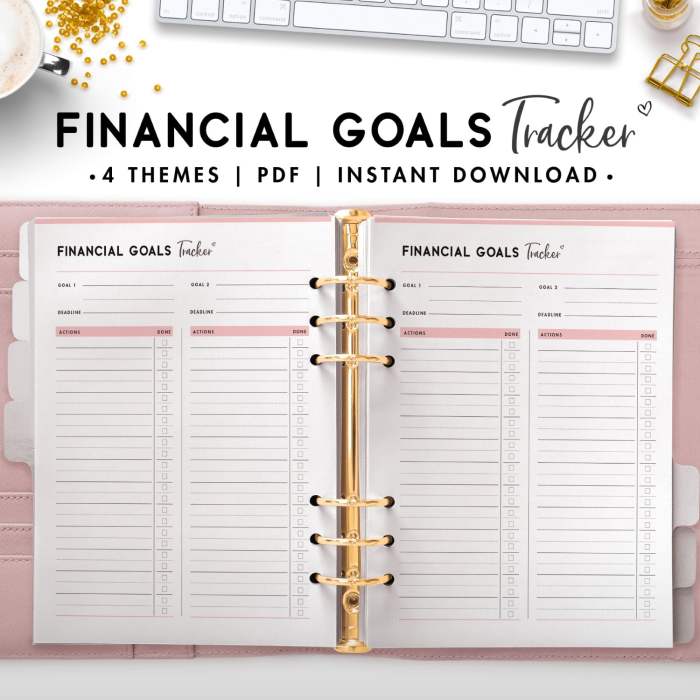
Effectively monitoring your financial progress requires dedicated tools that simplify the complexities of savings and investments. These tools provide a consolidated view of your financial health, allowing for better decision-making and a clearer path towards your financial goals. They range from simple spreadsheet solutions to sophisticated software packages, each offering a unique set of features tailored to different needs and levels of financial expertise.
Choosing the right tool depends on factors such as the complexity of your portfolio, your comfort level with technology, and your specific financial goals. Some tools focus primarily on savings accounts, while others offer comprehensive tracking of investments and retirement accounts. The ability to visualize your progress is a key feature to consider, as it provides a powerful motivational tool and helps you stay on track.
Comparison of Savings and Investment Tracking Tools
Several tools cater to the need for efficient savings and investment tracking. The following comparison highlights key features of some popular options, allowing for a more informed choice based on individual requirements.
- Personal Capital: Offers a comprehensive dashboard displaying all your financial accounts (bank accounts, investment accounts, retirement accounts) in one place. Unique features include investment analysis, retirement planning tools, and fee analysis. It provides a holistic view of your financial situation, helping identify areas for improvement and optimize your portfolio.
- Mint: A free budgeting and financial management tool that connects to your bank accounts, credit cards, and investment accounts. Its unique features include budgeting tools, spending tracking, and bill payment reminders. While it doesn’t offer the advanced investment analysis of Personal Capital, it’s an excellent option for users seeking a simpler, free solution for tracking savings and spending.
- Yodlee Money Center: (Note: Yodlee is a data aggregation company, not a consumer-facing tool. Many financial institutions and other financial software use Yodlee’s technology.) Provides aggregation of financial data from various sources. This is a crucial component of many personal finance tools and is known for its secure data aggregation capabilities. It’s important to note that you would likely access this through another application.
- Spreadsheet Software (e.g., Microsoft Excel, Google Sheets): Offers a highly customizable solution for tracking savings and investments. Users can create their own spreadsheets to track transactions, calculate returns, and visualize progress. The unique feature is the complete customization, allowing users to tailor the tracking system precisely to their needs. However, it requires more manual input and technical expertise.
Visualizing Progress Towards Savings and Investment Goals
These tools facilitate progress visualization through various methods, enhancing motivation and accountability. Interactive charts and graphs offer a clear picture of your financial growth, allowing you to easily monitor your progress towards your goals.
Many tools use visual representations like pie charts to show the allocation of your assets across different investment vehicles, bar graphs to track your savings growth over time, and line graphs to illustrate the performance of individual investments. These visual aids make it easier to understand complex financial data and stay focused on your objectives.
Hypothetical Scenario: Tracking Investment Growth with Personal Capital
Imagine Sarah, a young professional aiming to save for a down payment on a house in five years. She uses Personal Capital to track her investments in a diversified portfolio of stocks and bonds. She initially invests $10,000. Personal Capital automatically pulls data from her brokerage account, displaying her portfolio’s value and growth over time. She can easily see the impact of market fluctuations on her investment, and Personal Capital’s tools help her project her future portfolio value based on various growth scenarios.
By regularly reviewing these visualizations, Sarah stays motivated and can adjust her investment strategy if needed to stay on track for her goal.
For example, if after two years, Sarah’s portfolio shows a value of $12,000, Personal Capital could project her portfolio value at the end of five years, considering different potential growth rates. This helps her assess whether she is on track to reach her savings goal or needs to make adjustments, such as increasing her investment contributions or altering her investment strategy.
Debt Management Tools
Tackling debt effectively requires a strategic approach, and thankfully, numerous tools are available to assist in this process. These tools provide a centralized location to monitor debts, plan repayments, and visualize the impact of different repayment strategies, ultimately empowering users to achieve financial freedom faster. They offer a significant advantage over manual tracking methods by automating calculations and providing clear visual representations of progress.Debt management tools vary in complexity and features, ranging from simple spreadsheet templates to sophisticated software applications.
However, their core functionality revolves around debt tracking, repayment planning, and impact analysis. Many tools integrate with financial institutions to automatically import account data, eliminating the need for manual entry.
Debt Tracking and Categorization
These tools allow users to input details of all their debts – credit cards, loans, mortgages, etc. – including balance, interest rate, minimum payment, and due date. This consolidated view provides a clear picture of the overall debt burden. The categorization feature helps users understand where their debt is concentrated, allowing them to prioritize repayment strategies accordingly. For instance, a user might see that high-interest credit card debt is consuming a larger portion of their budget than their lower-interest student loan, prompting them to focus on the credit card debt first.
Debt Repayment Plan Creation and Monitoring
A key feature of debt management tools is the ability to create and monitor personalized repayment plans. Users can input their desired repayment timeline and available budget, and the tool will calculate the necessary payments for each debt based on various repayment strategies such as the debt snowball or debt avalanche methods. The tools then track progress against the plan, providing regular updates and visualizations of the remaining balance and time to debt freedom.
For example, a user might set a goal to be debt-free within three years, and the tool will adjust payments accordingly, while also providing alerts if they fall behind schedule.
Impact Analysis of Different Repayment Strategies
Effective debt management involves understanding the financial implications of different repayment approaches. These tools can simulate various scenarios, showing users how different strategies (e.g., prioritizing high-interest debts versus smaller debts first) impact the total repayment time and overall interest paid. This comparative analysis helps users make informed decisions about the best strategy for their individual circumstances. For instance, the tool could show that by prioritizing high-interest debt, the user could save thousands of dollars in interest over the life of the loans compared to paying off smaller debts first.
This data-driven approach enhances the effectiveness of the repayment plan.
Goal Setting and Progress Visualization Tools
Effective financial planning hinges on setting clear goals and consistently monitoring progress. Goal-setting tools, coupled with visual representations of progress, provide crucial feedback and motivation, making the often-daunting task of managing finances more manageable and less abstract. These tools transform financial goals from vague aspirations into concrete, achievable milestones.Many applications offer features that allow users to define SMART financial goals – Specific, Measurable, Achievable, Relevant, and Time-bound.
This structured approach ensures that goals are well-defined and progress can be objectively tracked. The visual representation of this progress, often through charts and graphs, provides a powerful motivational element, allowing users to see their accomplishments and stay focused on their long-term objectives.
Visualizing Financial Goal Progress
Several methods exist for visualizing financial progress. The choice of visualization method often depends on the specific goal and the user’s preferences. A clear understanding of the advantages and disadvantages of each method helps users select the most effective tool for their needs.
| Visualization Type | Advantages | Disadvantages | Example Use Case |
|---|---|---|---|
| Progress Bar | Simple, easy to understand, visually appealing, quickly shows progress percentage. | Can be simplistic, doesn’t show detailed breakdown of progress over time. | Tracking savings progress towards a down payment on a house. The bar fills as deposits are made, clearly showing how close the user is to the target amount. |
| Line Graph | Shows progress over time, highlighting trends and fluctuations, useful for long-term goals. | Can be difficult to interpret for those unfamiliar with graphs, may require more data points for clarity. | Monitoring investment growth over several years. The line graph shows the ups and downs of the investment, providing a clear picture of its performance. |
| Pie Chart | Clearly shows the proportion of each component contributing to a goal, useful for budgeting and debt allocation. | Can be less effective for showing progress over time, difficult to compare small differences between segments. | Visualizing the allocation of a monthly budget across different categories (housing, food, transportation, etc.). The size of each slice represents the percentage of the budget allocated to that category. |
| Bar Chart | Easy to compare progress across multiple goals or time periods, visually appealing and easy to interpret. | Can become cluttered with many data points, less effective for showing trends over time. | Comparing savings across multiple accounts or tracking progress towards different financial goals (e.g., emergency fund, vacation fund). Each bar represents a different goal, and its height represents the amount saved. |
Choosing the Right Tools Based on Individual Needs
Selecting the perfect financial goal tracking tool depends heavily on your unique circumstances. A tool ideal for a seasoned investor with complex portfolios might be overwhelming for someone just starting to budget. Consider your needs carefully to find a tool that’s both effective and user-friendly. This ensures you’ll actually use it consistently, maximizing its benefits.Factors Influencing Tool SelectionSeveral key factors should guide your choice.
Understanding these will significantly improve your chances of finding a tool that aligns with your financial management style and technical capabilities.
Budget Considerations
The cost of financial tracking tools varies widely. Some offer free basic plans, while others charge monthly or annual subscriptions with features scaling based on price. Free tools may lack advanced features or have limitations on data storage. Paid tools often provide more comprehensive features, better customer support, and higher security measures. Carefully weigh the cost against the features offered to determine if the investment justifies the expense.
For example, a simple budgeting app might suffice for someone with basic financial goals, whereas an investor managing a diverse portfolio might benefit from a more comprehensive, paid platform.
Technological Proficiency
Your comfort level with technology plays a crucial role. Some tools boast intuitive interfaces, while others may require a steeper learning curve. Consider your technical skills honestly. If you’re not tech-savvy, a tool with a simple, straightforward design is preferable. Conversely, if you’re comfortable navigating complex software, you can explore tools with advanced features like automated data import or sophisticated reporting capabilities.
For example, a spreadsheet program like Excel might be sufficient for someone comfortable with formulas and data entry, while a user-friendly app would be better suited for someone who prefers a simpler interface.
Goal Complexity
The complexity of your financial goals directly impacts your tool choice. Tracking simple savings goals requires less sophisticated tools than managing multiple investments, debts, and retirement planning. A basic budgeting app may suffice for simple savings goals, while a more robust tool with features like investment tracking and debt management capabilities is needed for more complex financial planning. For example, someone saving for a down payment might use a simple savings tracker, while someone planning for retirement would need a tool that integrates investment accounts, retirement projections, and tax implications.
Security and Privacy Features
Protecting your financial data is paramount. Before choosing a tool, thoroughly examine its security and privacy measures. Look for features such as encryption (both in transit and at rest), two-factor authentication, and a clear privacy policy outlining how your data is handled and protected. Reputable companies will openly share their security practices and compliance certifications. Be wary of tools that lack transparency in this area.
For example, a tool with end-to-end encryption and regular security audits offers a higher level of protection compared to one that lacks these features.
Decision-Making Flowchart for Tool Selection
A flowchart can help simplify the process of selecting the right tool.  The flowchart (depicted above) provides a visual representation of the decision-making process. It simplifies the process of selecting a tool based on whether the user’s needs are simple or complex. Further details and more nuanced options are left to the user’s judgment based on the information presented above.
Successfully navigating the world of personal finance hinges on effective goal setting and consistent tracking. By leveraging the right tools, you can gain valuable insights into your spending habits, optimize your savings strategies, and accelerate progress toward your financial aspirations. Remember, the best tool is the one that seamlessly integrates into your lifestyle and motivates you to stay engaged with your financial well-being.
Armed with the information presented here, you’re well-equipped to embark on a journey toward a more secure and prosperous future.
FAQs
What if I don’t have a lot of technical skills?
Many user-friendly apps offer intuitive interfaces and require minimal technical expertise. Look for tools with simple navigation and helpful tutorials.
Are these tools secure?
Reputable tools employ robust security measures, including encryption and data protection protocols. Always check user reviews and company privacy policies before using any financial tool.
How often should I review my financial goals and adjust my strategy?
Regular review, at least annually, or even quarterly for significant life changes, is recommended. This ensures your goals remain relevant and your strategies remain effective.
Can I use multiple tools together?
Yes, many users find it beneficial to utilize different tools for different aspects of their financial management. For example, one app for budgeting and another for investment tracking.